Jordan Becker · 17 September 2026
Decoding Complex Site Hierarchies: Advanced Techniques for Structural Optimization in Digital Platforms
Digital platforms often manage intricate content arrangements where categories, subcategories, and individual pages form layered relationships that influence user navigation and search engine processing alike, and experts in information architecture have documented how these structures evolve over time as platforms scale their offerings across multiple regions and device types.
Foundations of Site Hierarchy Design
Site hierarchies organize information through parent-child relationships that create logical pathways from broad topics to specific resources, and research from academic institutions indicates that well-planned structures reduce user disorientation while supporting efficient indexing by automated crawlers. Observers note that platforms relying on flat structures encounter limitations when content volume grows beyond several thousand pages, whereas deeper trees allow granular classification yet risk burying important material several clicks from the entry point.
Those who have studied large-scale deployments report that URL patterns, breadcrumb trails, and internal linking patterns work together to signal hierarchy depth to both visitors and algorithms, and data collected across enterprise sites shows consistent patterns where optimized depth levels correlate with improved retention metrics.
Common Structural Challenges in Expanding Platforms
Complex hierarchies frequently develop when multiple teams add content without centralized oversight, resulting in duplicate categories, orphaned pages, and inconsistent taxonomy that fragments the overall map. Studies conducted by university research groups have tracked how these inconsistencies accumulate, particularly on platforms that integrate third-party data feeds or user-generated sections without automated reconciliation processes.
Figures from industry analyses reveal that platforms exceeding one hundred thousand indexed pages commonly face crawl budget constraints when hierarchies contain excessive depth or repetitive subfolders, and September 2026 reports highlighted how several major digital services addressed this through systematic audits that consolidated overlapping branches.
Advanced Techniques for Optimization
Modern approaches combine algorithmic analysis with manual review to identify and flatten inefficient branches while preserving topical relevance, and practitioners apply clustering methods that group related content based on semantic similarity rather than strict folder logic. Tools that generate dynamic sitemaps based on real-time user behavior data allow hierarchies to adapt without constant manual intervention, and evidence from platform case studies demonstrates measurable gains in crawl efficiency after such implementations.
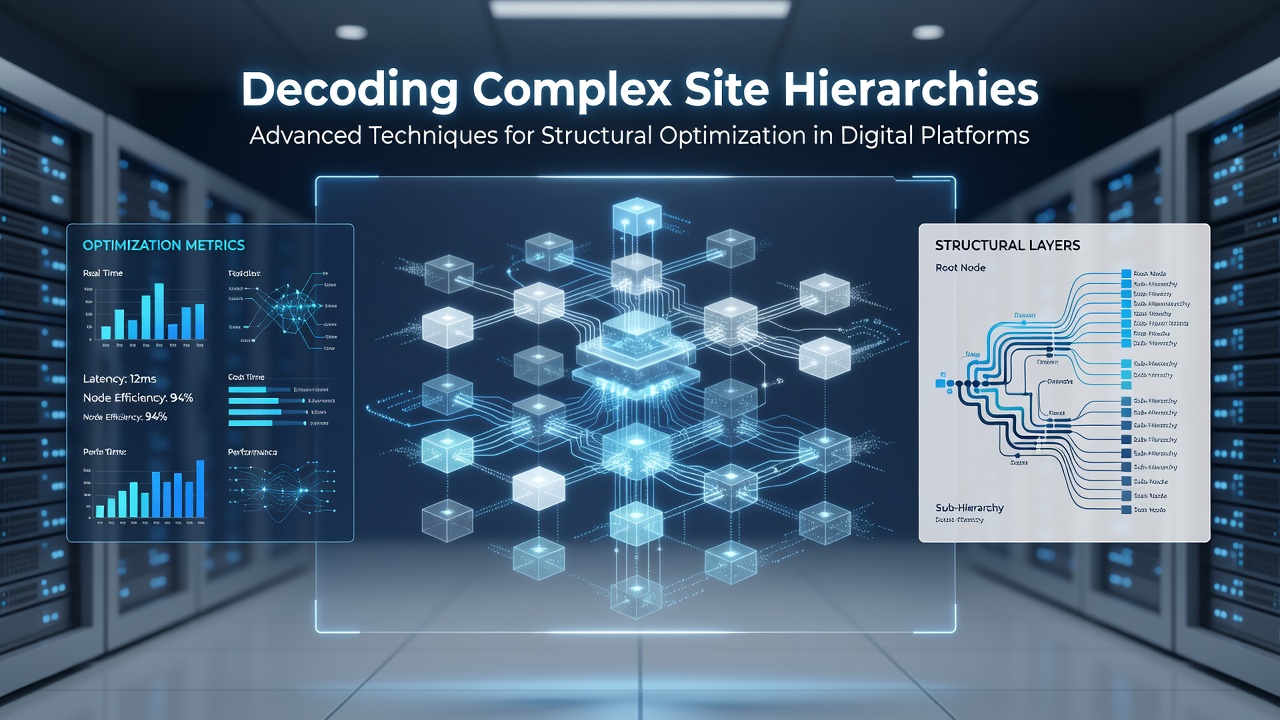
Entity-based structuring represents another layer where platforms map content around core topics instead of rigid categories, enabling faceted navigation that lets users traverse multiple dimensions simultaneously, and reports from European digital standards bodies confirm that this method aligns well with emerging web architecture guidelines on linked data. Those managing multilingual sites apply localized hierarchy adjustments that respect regional language patterns while maintaining a unified global backbone, reducing the duplication that arises from separate language trees.
Implementation Considerations Across Platforms
Successful restructuring projects begin with comprehensive audits that map current relationships through automated crawling combined with manual sampling, and analysts then prioritize changes based on traffic concentration and conversion pathways. Integration with existing content management systems requires careful handling of redirects and canonical signals to prevent indexing disruptions, and data from North American technology research centers shows that phased rollouts over several weeks minimize temporary ranking fluctuations compared with abrupt overhauls.
Continuous monitoring through analytics dashboards tracks how structural modifications affect both user paths and crawler behavior, allowing teams to refine taxonomies iteratively, and observers have noted that platforms incorporating machine learning models for ongoing hierarchy suggestions achieve more consistent long-term performance.
Conclusion
Structural optimization of complex site hierarchies relies on combining established principles of information architecture with newer algorithmic and data-driven methods, and the techniques outlined here provide frameworks that platforms can adapt to their specific scale and content profiles. Ongoing evaluation remains essential as digital environments continue to expand, ensuring that hierarchies support both discoverability and usability without introducing unnecessary complexity.