
Zara Schmitt · 15 October 2026
Navigating User Intent Signals Through Layered Taxonomy Systems in Expanding Online Marketplaces
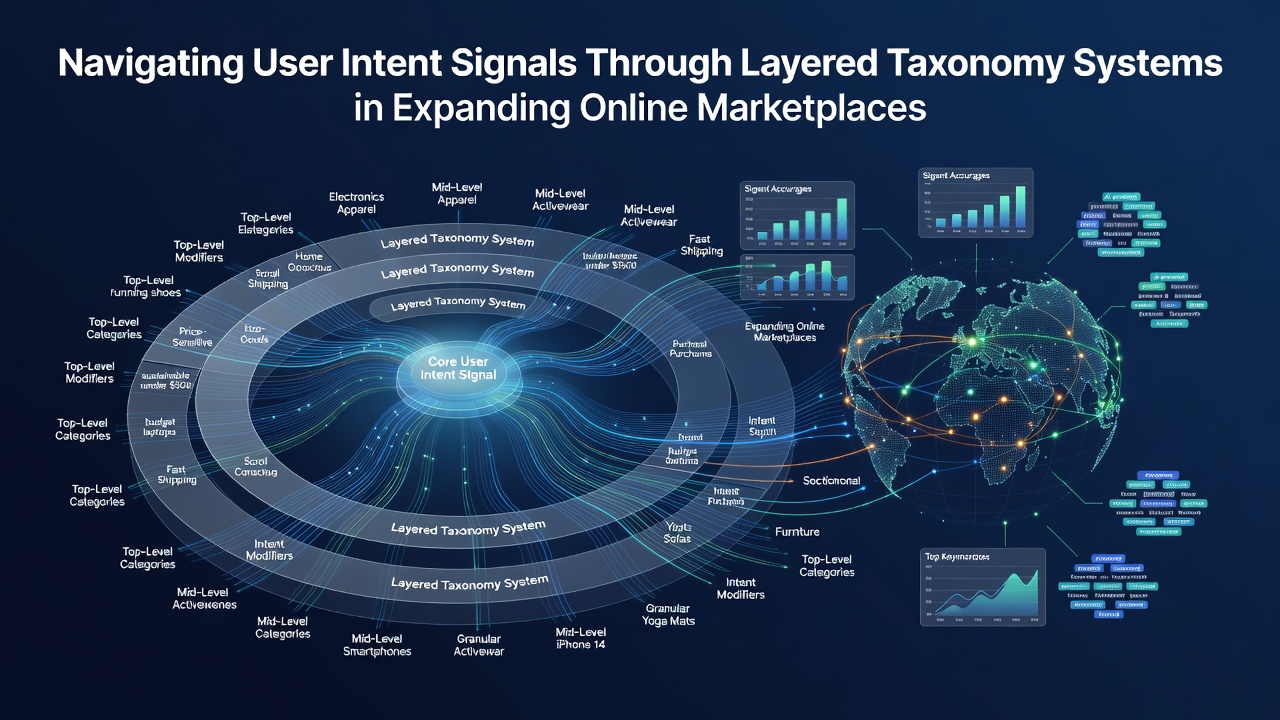
Online marketplaces continue to grow in scale and complexity, and layered taxonomy systems provide structured ways to interpret user intent signals that range from search queries to browsing patterns and purchase histories. These systems organize content into multiple levels where broad categories sit alongside narrower subcategories, and additional metadata layers capture behavioral indicators such as dwell time or filter selections. Data from expanding platforms shows that combining these elements improves how product recommendations align with what users actually seek at different stages of their journey.
Core Components of Layered Taxonomies
Layered taxonomies build on traditional hierarchies by adding dimensions that track intent signals directly. The first layer typically covers product attributes like type and price range, while subsequent layers incorporate signals from user actions including clicks on related items or repeated views of specific features. Researchers at various institutions have documented how this structure allows platforms to differentiate between exploratory browsing and high-intent purchasing behavior without requiring separate databases for each signal type. In practice, a marketplace handling millions of listings uses these layers to route traffic more efficiently, and the approach scales as new categories emerge during platform expansion.
Mapping User Intent Signals
User intent signals appear in several forms, and layered taxonomies translate them into actionable categories. Search terms feed into the top layer, but clickstream data and session duration populate deeper layers that refine the initial classification. Studies indicate that marketplaces integrating these signals see clearer separation between informational queries and transactional ones, which in turn supports more precise inventory surfacing. One analysis of high-traffic platforms revealed that intent layers updated in real time reduced mismatches between displayed items and actual user goals, particularly when seasonal trends shifted demand patterns across regions.
Implementation Across Growing Platforms
Implementation begins with mapping existing product data into the base taxonomy and then overlaying intent signals collected through platform analytics tools. Teams often start with a pilot category such as electronics or apparel, where user behavior data accumulates quickly, before expanding to other verticals. External reports from the European Commission on digital market dynamics highlight how layered approaches support compliance with transparency requirements while maintaining search relevance. As platforms add new sellers and listings, the taxonomy layers accommodate fresh signals without full restructuring, and automated rules adjust category weights based on aggregate user activity patterns observed in October 2026.
Case examples from North American and Asia-Pacific marketplaces demonstrate consistent application. A Canadian retail platform applied layered taxonomy to its home goods section and recorded measurable shifts in how intent signals directed traffic toward higher-conversion items. Similarly, Australian marketplace operators integrated regional preference data into the intent layers, which allowed the system to prioritize locally relevant stock during peak periods. These adaptations rely on continuous data feeds rather than static rules, and the resulting structure handles volume increases without proportional growth in manual oversight.
Challenges in Signal Integration
Integration challenges arise when signals conflict across layers or when new marketplace entrants introduce inconsistent data formats. Platforms address this through validation protocols that cross-check signals against historical patterns, and machine learning models refine layer assignments over successive iterations. Figures from industry analyses show that marketplaces maintaining at least three distinct taxonomy layers experience fewer instances of intent misclassification during rapid catalog growth. Observers note that the process requires ongoing calibration, especially when external events alter typical user behavior across entire categories.
Developments Observed in October 2026
By October 2026 several major platforms had begun rolling out enhanced intent layers that incorporate voice search transcripts and image-based queries alongside traditional text signals. These additions sit within existing taxonomy structures yet require new mapping rules to maintain consistency. Data released by the Australian Competition and Consumer Commission around the same period indicated rising e-commerce volumes in the region, underscoring the need for taxonomies that adapt without disrupting established seller workflows. The updates also align with broader regulatory expectations for clear product discoverability in expanding digital environments.
Conclusion
Layered taxonomy systems continue to serve as a central mechanism for interpreting user intent signals within expanding online marketplaces. The combination of hierarchical categories with dynamic behavioral layers enables platforms to process increasing volumes of data while preserving relevance across diverse user interactions. Evidence from multiple regions demonstrates that careful implementation supports both operational efficiency and regulatory alignment, and ongoing refinements keep the structures responsive to new signal types as marketplaces evolve.